
You probably already know that ChatGPT is a large language model developed by OpenAI that generates human-like text based on user prompts. But knowing what it is and actually using it to boost your bottom line are two very different things. Most marketers treat it like a fancy spellchecker or a lazy copywriter, missing the bigger picture entirely. The real innovation isn't just in writing faster; it's in reshaping how we approach data analysis, customer segmentation, and creative testing. If you're still pasting generic blog posts into your CMS without editing, you're leaving money on the table.
Let's cut through the hype. We aren't here to tell you that AI will replace your entire marketing team tomorrow. That's not happening. Instead, we're looking at ten concrete ways this technology changes the game right now, as of late 2026. Whether you're running a lean startup or managing enterprise-level campaigns, these shifts affect your workflow daily. Here is how you can actually leverage this tool to stay ahead.
Key Takeaways
- Hyper-Personalization at Scale: Move beyond basic "Hi [Name]" emails to dynamic content blocks tailored to individual user behavior.
- Rapid Creative Testing: Generate hundreds of ad variations in minutes to find winning hooks before spending budget.
- Data-to-Insight Translation: Use natural language queries to interpret complex analytics dashboards without needing a data scientist.
- SEO Intent Mapping: Analyze search intent clusters faster than manual keyword research tools allow.
- Customer Support Automation: Handle tier-one inquiries with nuanced, brand-voice responses that don't sound robotic.
Revolutionizing Content Strategy with Semantic Depth
Content creation used to be a bottleneck. You’d spend hours outlining, drafting, and editing a single pillar page. Now, AI-assisted writing allows for rapid prototyping of long-form articles. But the innovation isn't just speed-it's semantic depth. Traditional keyword stuffing is dead. Search engines now prioritize entities and relationships. ChatGPT excels at identifying these connections. You can feed it a competitor’s top-ranking article and ask it to identify missing entities or subtopics. It doesn't just rewrite; it critiques structure.
For example, if you’re writing about "Email Marketing," you can ask the model to list related concepts like "segmentation," "deliverability rates," and "A/B testing frameworks." This ensures your content covers the topic comprehensively, signaling authority to search algorithms. It turns content planning from a guessing game into a structured, data-backed process. You stop worrying about word count and start focusing on topical coverage.
Hyper-Personalized Email Campaigns
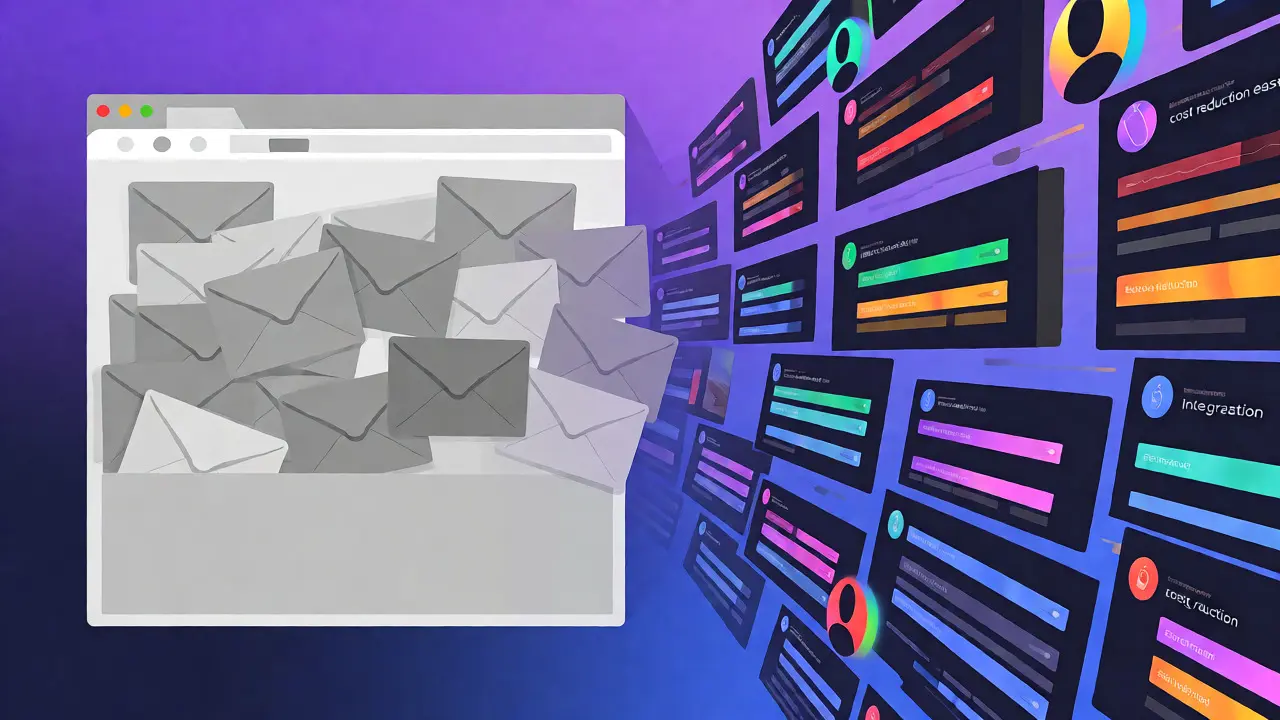
We’ve all seen the fatigue of generic newsletters. Users ignore them because they feel mass-produced. ChatGPT enables true hyper-personalization. Imagine segmenting your audience not just by demographics, but by behavioral triggers. You can generate unique email bodies for each segment based on their last purchase or browsing history. The model adjusts tone, length, and call-to-action (CTA) dynamically.
A practical application involves generating subject lines that resonate with specific pain points. For a B2B SaaS company, one segment might care about "cost reduction," while another cares about "integration ease." ChatGPT can draft ten variants for each segment instantly. You then test these against traditional static emails. The result? Higher open rates and click-through rates because the message feels relevant to the recipient’s current state of mind. It’s not magic; it’s targeted relevance at scale.
Accelerating Social Media Management
Social media moves fast. Trends disappear in days. Keeping up requires constant content production. ChatGPT acts as a tireless brainstorming partner. Feed it a trending topic-say, a new feature update on LinkedIn-and ask for five different angles: humorous, educational, controversial, inspirational, and data-driven. Within seconds, you have a content calendar filled with diverse ideas.
Beyond ideation, it helps with community management. When comments flood in, the model can suggest replies that maintain brand voice while addressing specific questions. It detects sentiment in negative reviews and drafts empathetic responses that de-escalate tension. This frees up your social media manager to focus on high-value interactions and strategy rather than repetitive typing. The key is training the model on your brand guidelines so it sounds like you, not a robot.
Enhancing SEO with Intent Analysis
Search Engine Optimization (SEO) has shifted from keywords to intent. Knowing someone searches for "best CRM" isn't enough; you need to know if they want a comparison, a review, or a tutorial. ChatGPT analyzes search query patterns to infer intent. You can paste a list of 500 long-tail keywords and ask the model to cluster them by intent type: informational, navigational, transactional, or commercial investigation.
This clustering saves hours of manual sorting. Once clustered, you can map content types to each group. Informational queries get blog posts; transactional queries get landing pages. The model also suggests internal linking opportunities by identifying which topics naturally lead to others. This structural optimization boosts dwell time and reduces bounce rates, core metrics for ranking higher in search results.
Data Interpretation Without Code
Most marketers hate Excel formulas. They stare at Google Analytics reports, seeing numbers but missing stories. ChatGPT bridges this gap. You can export CSV data from your ad platforms and paste it directly into the chat interface. Ask simple questions: "Which campaign had the highest ROI per dollar spent?" or "Identify the day of the week with the lowest conversion rate."
The model processes the raw data and provides clear, narrative insights. It highlights anomalies and trends you might miss visually. For instance, it might notice that mobile traffic converts better on weekends but drops on weekdays. This actionable insight allows you to adjust bidding strategies immediately. No SQL knowledge required. Just plain English questions and precise answers. This democratizes data access across your team, empowering non-technical staff to make informed decisions.
Creative Ad Copy Generation and Testing
Paid advertising thrives on creativity. A strong hook can double your click-through rate. ChatGPT generates dozens of ad copies in seconds. You provide the product features, target audience, and desired tone. It outputs variations emphasizing different benefits. One version focuses on speed, another on security, a third on cost savings.
| Metric | Traditional Method | ChatGPT-Assisted Method |
|---|---|---|
| Time to Draft 10 Variations | 4-6 hours | 5-10 minutes |
| Tone Consistency | Varies by writer mood | Highly consistent via prompt engineering |
| Diversity of Angles | Limited by writer bias | Broad range of psychological triggers |
| Cost Per Variation | $50-$100 (freelance) | Negligible (API cost) |
Once generated, you run these ads in split tests. The winner informs future campaigns. This iterative loop accelerates learning. You fail fast and cheaply. Over time, you build a library of proven hooks and structures that work for your specific audience. It transforms ad creation from an art form into a science experiment.
Streamlining Customer Support Workflows
Customer support is often the first touchpoint for potential buyers. Slow or unhelpful responses lose sales. ChatGPT integrates with helpdesk software to draft responses to common tickets. It reads the customer’s query, checks your knowledge base, and drafts a reply. Crucially, it adapts the complexity of the answer based on the user’s technical level inferred from their language.
For e-commerce brands, this means handling order status inquiries, return policies, and product recommendations automatically. The system flags complex issues for human agents, ensuring they only deal with high-stakes cases. This reduces average response time from hours to minutes. Happy customers mean better retention rates and positive reviews. It’s not about replacing humans; it’s about removing friction from the customer journey.

Competitive Intelligence Gathering
Keeping an eye on competitors is exhausting. You have to monitor their blogs, social feeds, and press releases. ChatGPT simplifies this. Paste recent headlines or summaries from competitor sites and ask for a SWOT analysis (Strengths, Weaknesses, Opportunities, Threats). The model identifies patterns in their messaging and positioning.
It can also simulate competitor personas. Ask, "How would Competitor X respond to our new pricing model?" The model uses its training data on industry norms to predict likely reactions. This strategic foresight helps you prepare counter-moves before launching a campaign. You gain a tactical advantage by understanding the market landscape more deeply than those relying solely on gut feeling.
Personalized User Onboarding Experiences
User onboarding determines whether a trial converts to a paid subscription. Generic walkthroughs often overwhelm users. ChatGPT creates personalized onboarding sequences. By analyzing sign-up data, it generates step-by-step guides tailored to the user’s role or industry. A marketer gets tips on integration with HubSpot; a developer sees API documentation highlights.
This personalization increases engagement during the critical first week. Users see immediate value relevant to their needs. The model can even generate FAQ sections specific to the user’s likely stumbling blocks. Reduced confusion leads to higher activation rates. It turns a static product tour into a dynamic, conversational experience that guides users to success.
Automated Market Research Synthesis
Market research usually involves reading endless reports and surveys. ChatGPT synthesizes this information quickly. Upload PDFs of industry reports or paste survey responses. Ask it to summarize key trends, extract quotes from dissatisfied customers, or identify emerging demands. It condenses hundreds of pages into bullet-point insights.
This speed allows for agile decision-making. Instead of waiting months for a quarterly report, you get weekly insights. You can pivot product features or marketing messages based on real-time feedback loops. The model highlights contradictions in data, prompting further investigation. It acts as a junior analyst who never sleeps, providing foundational research that senior strategists can build upon.
Next Steps for Implementation
Don’t try to automate everything at once. Start small. Pick one area, like email subject lines or social captions, and implement ChatGPT there. Measure the impact. Did engagement rise? Did save time translate to other tasks? Iterate based on results. Train your team on prompt engineering basics. Bad prompts yield bad outputs. Treat the AI as a collaborator, not a commander. Review its output critically. Edit for accuracy and brand voice. Over time, integrate deeper into your workflow, moving from content generation to strategic analysis.
Will ChatGPT replace human marketers?
No, it won't replace them. It replaces repetitive tasks. Human creativity, emotional intelligence, and strategic oversight remain crucial. Marketers who use AI effectively will outperform those who don't, but the human element is irreplaceable for building genuine brand connections.
Is content generated by ChatGPT good for SEO?
Yes, if edited properly. Raw AI output can be generic or factually incorrect. You must verify facts, add unique insights, and ensure proper entity usage. High-quality, edited AI content ranks well because it satisfies user intent and covers topics comprehensively.
How much does it cost to use ChatGPT for marketing?
Costs vary by usage volume. Individual plans start around $20/month. Enterprise solutions with API access charge per token used. For most small businesses, the time saved outweighs the subscription cost significantly. Calculate your hourly rate versus time saved to determine ROI.
Can ChatGPT handle sensitive customer data?
Be cautious. Standard consumer versions may use data for training. For sensitive client info, use enterprise tiers with data privacy guarantees or anonymize data before inputting it. Never paste personally identifiable information (PII) into public models without checking compliance policies.
What is the biggest mistake marketers make with AI?
Publishing raw output without editing. AI hallucinates facts and lacks brand nuance. Always review, edit, and personalize the content. Treat it as a first draft, not a final product. Quality control is essential for maintaining trust.