
You’ve got a great product. You’ve got the drive. But you’re staring at your bank account wondering why the sales aren’t rolling in like they do for everyone else on LinkedIn. Here’s the hard truth: building a business is easy; getting people to actually buy from you is where most founders stumble. It’s not about having a website or posting on Instagram once a week. It’s about understanding how digital marketing works as a system to turn strangers into customers.
This guide isn’t another list of buzzwords. We’re going to break down exactly how entrepreneurs can use digital channels to grow without burning through their savings on ads that don’t convert. Whether you are bootstrapping in Perth or scaling globally, the principles remain the same. You need clarity, consistency, and a strategy that aligns with your budget.
Why Traditional Marketing Fails New Founders
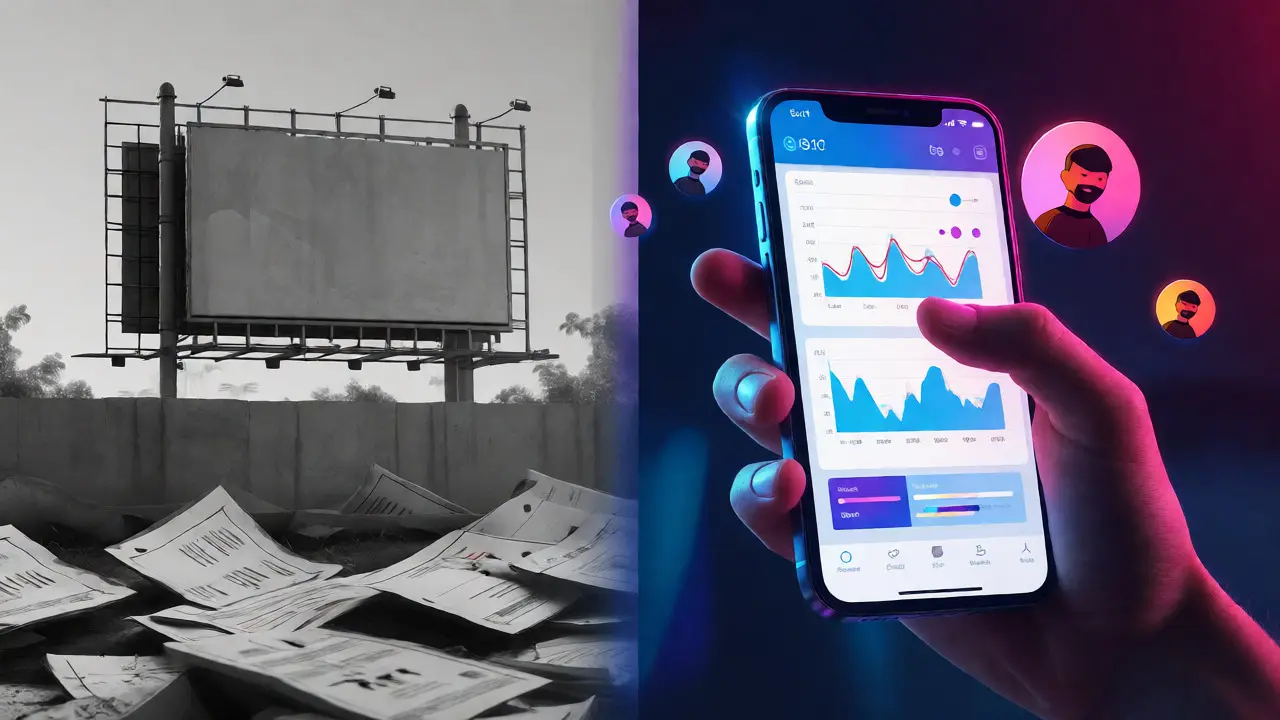
Most entrepreneurs start by throwing money at problems. They print flyers, run local radio spots, or boost random Facebook posts because it feels like activity. But traditional methods often lack the feedback loop that digital offers. When you spend $100 on a billboard, you have no idea who saw it or if they cared. With digital, every click is data.
The biggest mistake I see? Trying to be everywhere at once. You try to master TikTok, SEO, email, and paid ads simultaneously while also running the business. This leads to burnout and mediocre results across the board. Instead, focus on one channel that matches your audience’s behavior. If you sell B2B software, your clients are likely on LinkedIn or reading industry blogs, not dancing on Reels. Pick one lane, dominate it, then expand.
Defining Your Ideal Customer Profile (ICP)
You cannot market to "everyone." That’s a recipe for wasting cash. Before you write a single ad copy or blog post, you need to define your Ideal Customer Profile. This isn't just demographics like "males aged 25-40." It’s psychographics. What keeps them up at night? What tools do they currently hate? Where do they hang out online?
For example, if you sell ergonomic chairs for remote workers, your ICP isn’t just "office workers." It’s likely freelancers or startup employees who work from home, experience back pain, value aesthetics, and research purchases via YouTube reviews. Once you know this, your messaging changes from "Buy our chair" to "Stop suffering through 8-hour Zoom calls." Specificity sells.
The Core Pillars of Digital Strategy
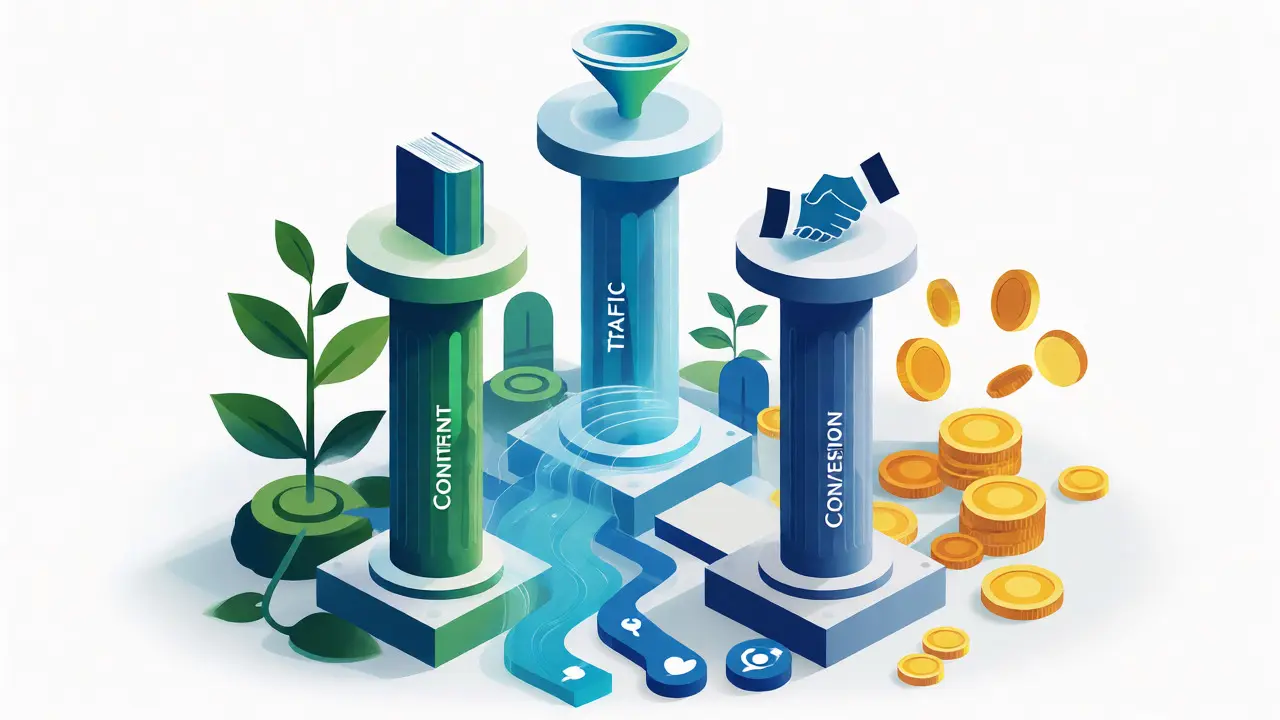
Digital marketing is broad, but for entrepreneurs, it boils down to three main pillars: Content, Traffic, and Conversion. Ignore any one of these, and the system breaks.
Content: Value First, Sales Second
Content is the fuel. It builds trust before the ask. Many founders think content means writing boring blog posts. Wrong. Content is any asset that solves a problem for your user. It could be a short video tutorial, a checklist, a podcast episode, or a detailed case study.
The rule of thumb here is the 80/20 principle. Give away 80% of your knowledge for free. Sell the remaining 20%. If you’re a consultant, teach them how to solve the small stuff. Then offer your service to handle the complex parts. High-quality content establishes authority. When people see you as an expert, price objections drop significantly.
Traffic: Owned, Earned, Paid
Once you have content, you need eyeballs on it. There are three ways to get traffic, and each has different costs and risks.
| Type | Examples | Cost | Speed | Risk |
|---|---|---|---|---|
| Owned | Email list, Website, Blog | Low (Time-intensive) | Slow build | Low (You control it) |
| Earned | SEO, Social Shares, PR | Medium (Skill-intensive) | Medium | Medium (Algorithm changes) |
| Paid | Facebook Ads, Google PPC | High (Cash-intensive) | Instant | High (Budget drain) |
Startups usually fail because they rely too heavily on Paid traffic before they have a converting offer. Or they rely solely on Owned media and wait years for results. A balanced approach uses Paid to test messages quickly, Earned to build credibility over time, and Owned to nurture relationships.
Conversion: Turning Visitors into Buyers
Traffic is vanity if it doesn’t convert. Your website and landing pages must be designed to reduce friction. If a user lands on your page and doesn’t understand what you do within five seconds, they leave. This is called bounce rate, and high bounce rates kill your ad performance scores.
Use clear calls-to-action (CTAs). Avoid generic buttons like "Submit." Use action-oriented language like "Get My Free Quote" or "Start Trial." Also, ensure your site loads fast. On mobile devices, a delay of more than two seconds can increase abandonment by up to 50%. Tools like GTmetrix can help you check your speed.
Leveraging SEO for Long-Term Growth
Search Engine Optimization (SEO) is often misunderstood as keyword stuffing. It’s not. SEO is the practice of optimizing your content so search engines understand it’s relevant to a user's query. For entrepreneurs, SEO is a long game. It takes 6-12 months to see significant organic traffic, but once it arrives, it’s free.
Focus on long-tail keywords. Instead of trying to rank for "marketing," which is fiercely competitive, target specific phrases like "digital marketing tips for small retail stores." These queries have lower volume but much higher intent. People searching for specific solutions are ready to buy. Write comprehensive articles that answer those questions completely. Link internally between related posts to keep users on your site longer, which signals quality to Google.
Social Media: Community Over Broadcasting
Stop treating social media like a TV commercial. Nobody follows brands to watch ads; they follow them for entertainment, education, or community. If you’re posting only promotional links, you’re doing it wrong.
Engage first. Comment on other posts in your niche. Reply to every comment on your own posts. Build relationships. For entrepreneurs, personal branding often outperforms corporate accounts. People connect with people. Share behind-the-scenes struggles, wins, and lessons learned. Authenticity builds trust faster than polished graphics ever will.
Choose platforms strategically. Visual products thrive on Instagram and Pinterest. Complex services do well on LinkedIn and Twitter (X). Don’t spread yourself thin. Master one platform, create a consistent posting schedule, and analyze what resonates.
Email Marketing: The Highest ROI Channel
If you take nothing else from this guide, remember this: Email marketing consistently delivers the highest return on investment for small businesses. Why? Because you own the relationship. Social algorithms change; email lists don’t.
Start collecting emails immediately. Offer a lead magnet-a free guide, template, or webinar-in exchange for contact info. Then, send regular newsletters. Not blasts, but valuable updates. Segment your list based on interest. If someone downloaded a guide on pricing, send them pricing-related content. If they downloaded a technical setup guide, send advanced tips. Personalization increases open rates and conversions dramatically.
Analyzing Data and Iterating
Data tells you what’s working. Most entrepreneurs ignore analytics until things go wrong. Set up basic tracking early. Install Google Analytics 4 and Facebook Pixel on your site. Track key metrics:
- Customer Acquisition Cost (CAC): How much do you spend to get one paying customer?
- Lifetime Value (LTV): How much does a customer spend with you over time?
- Conversion Rate: What percentage of visitors become leads or buyers?
If your CAC is higher than your LTV, you’re losing money. Adjust your strategy. Maybe your ad targeting is too broad. Maybe your landing page is confusing. Test one variable at a time. Change the headline, measure the result. Change the image, measure again. Continuous improvement beats perfectionism.
Budgeting Smartly as a Bootstrapper
You don’t need thousands of dollars to start. You need time and creativity. Allocate 70% of your effort to organic strategies (content, SEO, social engagement) and 30% to paid experiments. As revenue grows, shift more budget to paid channels to scale faster.
Avoid expensive agency retainers early on. Hire freelancers for specific tasks-like setting up a funnel or designing graphics-rather than committing to monthly contracts. Use tools like Canva for design, Mailchimp for email, and Buffer for scheduling. Keep overhead low until product-market fit is proven.
How much should I spend on digital marketing as a new entrepreneur?
There is no fixed number, but a common rule of thumb is to allocate 5-10% of your projected annual revenue to marketing. For bootstrappers starting from zero, focus on time investment first. Spend roughly 10-15 hours a week on marketing activities before investing heavily in paid ads. Once you have validated sales, reinvest a portion of profits into scaling.
Do I need a website to start digital marketing?
While not strictly mandatory, a website acts as your central hub. It lends credibility and allows you to capture leads via email forms. You can start with simple landing pages using tools like Carrd or WordPress. However, relying solely on social media profiles limits your control and data ownership. A basic site is highly recommended for long-term stability.
Which social media platform is best for beginners?
It depends entirely on your target audience. B2B companies often find success on LinkedIn. Consumer lifestyle brands perform well on Instagram and TikTok. Local services may benefit from Facebook Groups. Don't guess; look at where your competitors' customers are engaging. Start with one platform to avoid overwhelm.
How long does it take to see results from SEO?
SEO is a slow-burn strategy. Expect to see initial improvements in rankings after 3-6 months, with significant traffic growth typically occurring between 6-12 months. Consistency in publishing high-quality content and building backlinks is crucial for accelerating this timeline.
Is email marketing still effective in 2026?
Absolutely. Despite the rise of social media and AI chatbots, email remains the most direct line to your customers. It has higher conversion rates than social media because subscribers have opted in to hear from you. Automation tools make it easier than ever to personalize campaigns at scale.