
You scroll through your feed, see a headline that makes your blood boil or gives you a warm fuzzy feeling of validation, and hit share. But did you actually read it? Or did the emotional hook do the work for you? We are drowning in information, but starving for truth. Enter ChatGPT, an AI language model developed by OpenAI that uses natural language processing to analyze text patterns. It is not just a chatbot; it is becoming one of our most powerful tools for spotting propaganda.
Think about the last time you read a news article. Did it use loaded words? Did it present a complex issue as black and white? Human brains are wired to take shortcuts. We look for confirmation, not contradiction. This is where artificial intelligence steps in. It doesn't get tired. It doesn't have political biases (well, mostly). It looks at syntax, tone, and structure. In this guide, we will break down how you can use AI to detect propaganda, what techniques it spots best, and where it still falls short.
The Rise of Automated Media Analysis
For decades, detecting propaganda was a job for academics and journalists with plenty of free time. They would manually tag texts for specific rhetorical devices. It was slow. It was subjective. Then came Natural Language Processing (NLP), a subfield of artificial intelligence focused on the interaction between computers and humans through natural language. NLP allows machines to understand context, sentiment, and intent.
ChatGPT, specifically versions like GPT-4, has taken this further. Unlike older keyword-based tools, it understands nuance. If a sentence says "The policy failed," versus "The policy was sabotaged by enemies," ChatGPT recognizes the shift from objective reporting to accusatory framing. This capability transforms media literacy from a niche skill into an accessible daily habit.
Why does this matter now? Because the volume of content generated by other AIs is exploding. We are seeing a feedback loop: AI generates content, humans consume it, and other AIs analyze it. Being able to spot the manipulation is no longer optional; it is a survival skill for digital citizens.
What Is Propaganda Anyway?
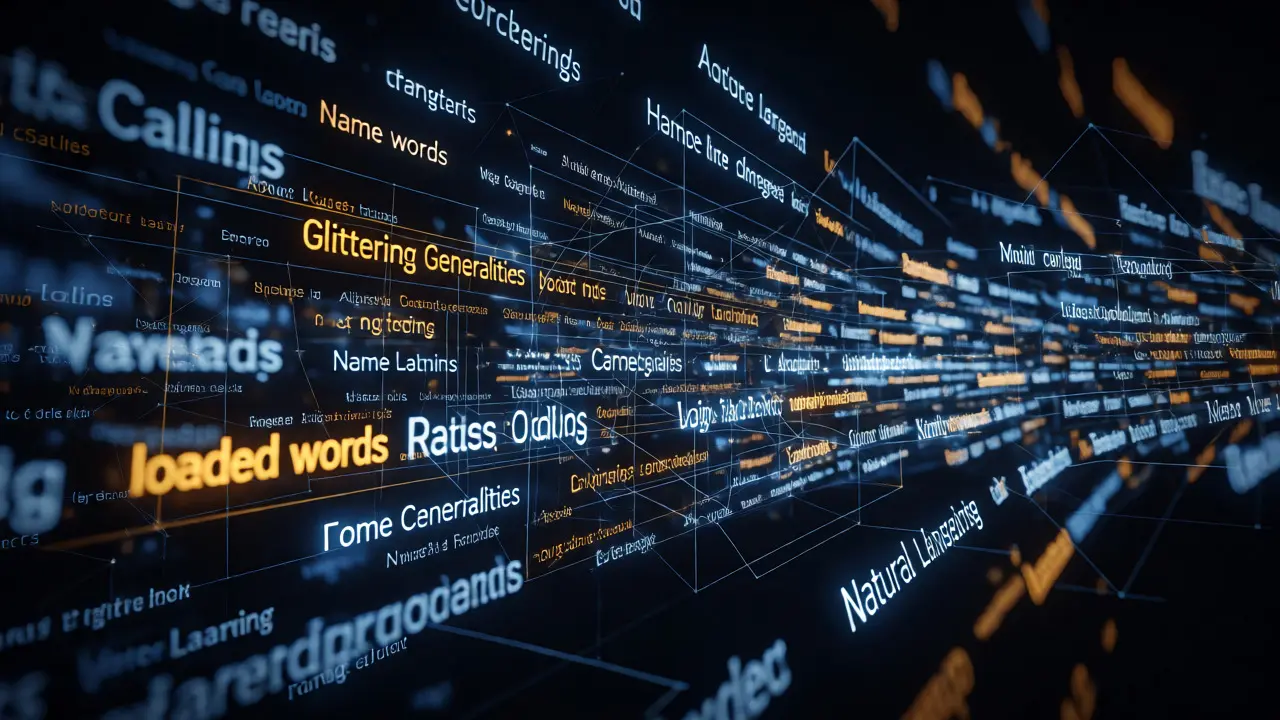
Before we ask the AI to find it, we need to know what we are looking for. Propaganda isn't just "lies." It is systematic persuasion using biased or misleading data to promote a political cause or point of view. The Institute for Propaganda Analysis identified seven classic techniques back in the 1930s. Surprisingly, these haven't changed much. Only the delivery mechanism has.
Here are the big ones AI looks for:
- Name Calling: Attaching negative labels to people or ideas to discourage critical thinking.
- Glittering Generalities: Using vague, positive-sounding words like "freedom" or "justice" without concrete meaning.
- Transfer: Associating something desirable (like a flag) with a controversial idea.
- Testimonial: Using famous or respected people to endorse a product or idea.
- Plain Folks: Trying to convince listeners that the speaker's ideas are "of the people".
- Card Stacking: Selectively highlighting facts while ignoring others.
- Bandwagon: Convincing people to join because "everyone else is doing it".
ChatGPT excels here because it can identify these patterns instantly across thousands of words. You don't need a PhD in rhetoric anymore. You just need a prompt.
How to Use ChatGPT for Propaganda Detection
So, how do you actually do this? You don't just paste text and hope for magic. You need to engineer your prompts. Generic questions yield generic answers. Specific instructions yield precise analysis.
Try this workflow next time you read a suspicious article:
- Paste the Text: Copy the core argument or headline into the chat window.
- Define the Role: Tell the AI who it is. "Act as a media literacy expert specializing in propaganda analysis."
- Request Specific Techniques: Ask it to identify which of the seven classic propaganda techniques are used.
- Ask for Evidence: Require the AI to quote the exact sentences that demonstrate the technique.
- Evaluate Tone: Ask for a sentiment analysis. Is the tone neutral, aggressive, or euphoric?
For example, if you paste a political op-ed, you might ask: "Analyze this text for logical fallacies and propaganda techniques. Highlight any instances of 'card stacking' or 'name calling.' Provide a confidence score for each identification."
This structured approach forces the model to be rigorous rather than conversational. It turns a chatty bot into an analytical tool.
Comparing AI Detection Methods
Not all AI tools are created equal. Some are built for speed, others for depth. Here is how different approaches stack up when analyzing media bias.
| Feature | Keyword-Based Tools | Traditional NLP Models | Large Language Models (e.g., ChatGPT) |
|---|---|---|---|
| Context Understanding | Low | Medium | High |
| Detection Speed | Very Fast | Fast | Moderate |
| Nuance & Sarcasm | Poor | Fair | Excellent |
| Cost | Free/Low | Moderate | Subscription/API Cost |
| Explainability | High (simple matches) | Low (black box) | High (can explain reasoning) |
As you can see, Large Language Models like ChatGPT offer the best balance of nuance and explainability. While keyword tools might flag the word "terrorist," they won't understand if it's being used descriptively or pejoratively. ChatGPT can make that distinction, though it requires careful prompting.
The Pitfalls: Where AI Gets It Wrong
Don't put your guard down just because a robot said so. AI hallucinates. It confabulates. Sometimes, it sees propaganda where there is none, simply because it over-analyzes simple statements.
One major risk is confirmation bias mirroring. If you ask ChatGPT, "Is this article left-wing propaganda?", it might find evidence to support your hypothesis, even if the article is fairly neutral. LLMs are eager to please. They often align their output with the user's implied expectation. To counter this, always ask neutral questions. Instead of "Is this biased?", ask "Identify potential biases in this text." Another issue is cultural context. An idiom common in Perth might sound strange to an AI trained heavily on US-centric data. It might misinterpret local slang as sarcasm or aggression. Always verify the AI's findings against your own intuition. The AI is a co-pilot, not the captain.
Also, consider the source of the training data. Most models are trained on internet text, which is itself full of propaganda. There is a circularity there. The AI learns to spot manipulation by studying manipulated text. It works, but it's imperfect.
Beyond Text: Visual and Audio Propaganda
We live in a visual world. Memes, infographics, and short videos carry more propaganda weight than long-form articles. Can ChatGPT help here? Yes, but indirectly.
With multimodal capabilities, newer models can analyze images. You can upload a meme and ask, "What emotional triggers are used in this image? Does it employ the 'bandwagon' technique?" The AI might describe the colors, the facial expressions, and the text overlay. It can tell you that the red background suggests urgency or anger, and the crowd shot implies popularity.
For audio, you first transcribe the speech using tools like Whisper, then run the text through your propaganda analysis prompt. This two-step process is highly effective for analyzing political speeches or podcast clips. It breaks down the rhetoric behind the charisma.
Practical Applications for Everyday Users
Who benefits from this? Everyone, really. But some groups can leverage it more effectively.
Students and Researchers: Use AI to quickly scan hundreds of sources for bias before diving deep. It saves hours of preliminary reading.
Journalists: Fact-checkers can use AI to cross-reference claims with known propaganda patterns. If a press release suddenly shifts from factual to emotional, the AI flags it.
Marketers: Understanding propaganda helps you write better copy. If you know what manipulates consumers, you can avoid using those same tricks on them, building trust instead.
Citizens: Simply being aware of how your brain is being hacked reduces the power of the hack. When you see a headline, pause. Run it through the mental checklist. Or, paste it into your AI assistant. The act of questioning changes your relationship with the media.
Future Trends: Real-Time Propaganda Scoring
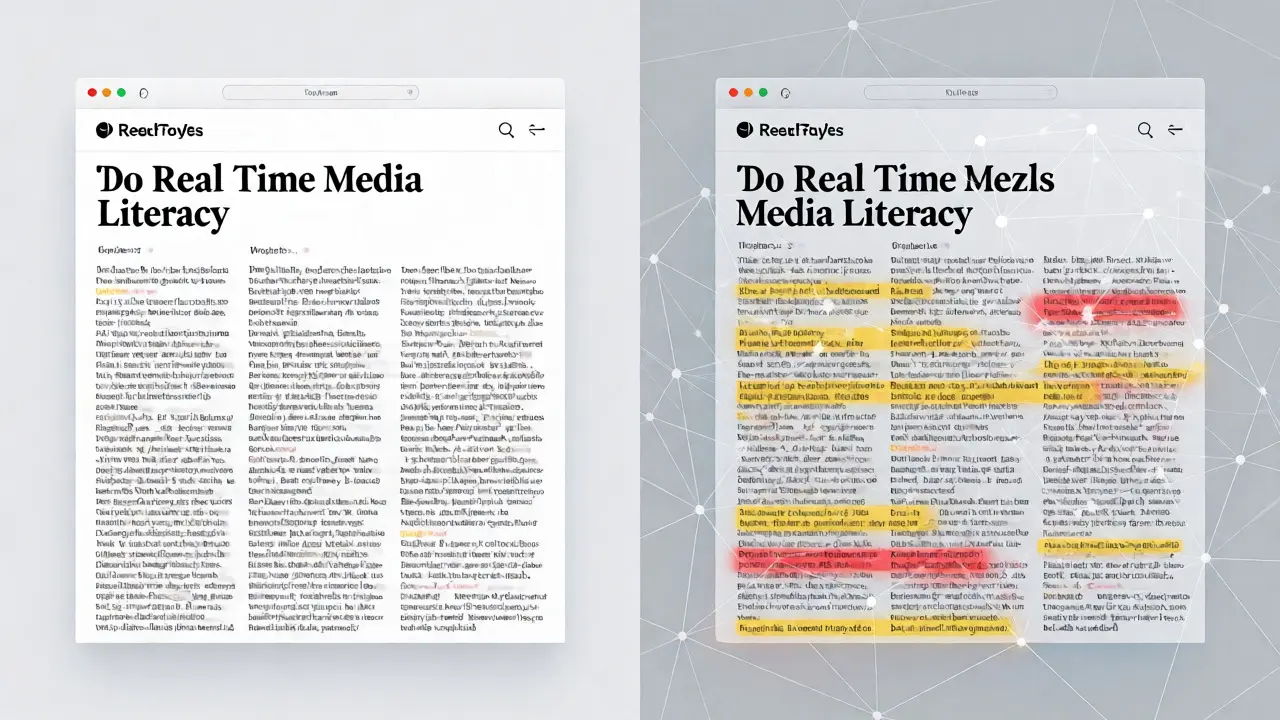
We are moving toward browser extensions that highlight propaganda in real-time. Imagine reading a news site, and certain phrases glow yellow or red based on their manipulative potential. These tools are already in development.
They will likely combine large language models with knowledge graphs. A knowledge graph connects entities-people, places, events-with verified facts. If a statement contradicts the graph, it gets flagged. If it uses emotionally charged language not supported by the graph, it gets flagged.
This technology won't eliminate propaganda. People love being told what to think. But it will raise the barrier to entry for lazy manipulation. It forces creators to be smarter, and consumers to be more active.
Key Takeaways
- AI is a tool, not an oracle: Use ChatGPT to assist your critical thinking, not replace it.
- Prompt engineering matters: Neutral, specific prompts yield better analysis than leading questions.
- Classic techniques persist: Name-calling and card-stacking are still the primary weapons of modern propaganda.
- Verify everything: AI can hallucinate. Always check its quotes against the original text.
- Expand beyond text: Use transcription and image analysis to cover the full spectrum of media consumption.
Can ChatGPT completely remove bias from my news feed?
No, it cannot. ChatGPT analyzes text after you have selected it. It helps you understand the bias in what you are reading, but it does not curate your feed. Algorithms on social media platforms determine what you see, often prioritizing engagement over accuracy. ChatGPT is a diagnostic tool, not a filter bubble breaker.
Is AI propaganda detection accurate enough for academic research?
It is increasingly used as a supplementary method. For small datasets, manual coding by experts is still the gold standard. However, for large-scale studies involving thousands of articles, AI provides consistent, scalable initial tagging. Researchers typically validate a subset of AI results to ensure reliability before trusting the broader output.
Does ChatGPT have its own political bias?
Yes, potentially. Since it is trained on internet data, it reflects the dominant viewpoints found therein. Critics argue it leans towards progressive Western perspectives. This means it might label conservative rhetoric as more "propagandistic" than liberal rhetoric, simply due to familiarity. Always test the AI with diverse sources to gauge its blind spots.
What is the difference between propaganda and marketing?
Propaganda aims to influence beliefs and behaviors, often for political or ideological reasons, sometimes disregarding truth. Marketing aims to sell products or services. However, they overlap significantly. Political campaigns use marketing tactics, and brands use propaganda techniques (like bandwagoning) to build loyalty. The intent and the stakes differ, but the mechanisms of persuasion are often identical.
Can I use free AI tools for this?
Yes, basic versions of ChatGPT and other open-source models like Llama 3 can perform decent propaganda analysis. Paid versions usually offer better reasoning capabilities and larger context windows, allowing you to paste entire articles rather than just excerpts. For casual users, the free tier is sufficient for headlines and short paragraphs.