
Stop staring at a blank screen. If you’re managing social media accounts in 2026, the old way of writing every caption from scratch is dead. You don’t need to be a poet to get engagement; you need to be strategic. Enter ChatGPT, an advanced large language model developed by OpenAI that generates human-like text based on prompts. It’s not just a chatbot anymore. It’s your tireless copywriter, your data analyst, and your brainstorming partner all rolled into one.
The goal here isn’t to replace your voice. It’s to amplify it. By using generative AI correctly, you can cut your content production time in half while actually improving the quality of your posts. Let’s look at how to do this without sounding like a robot.
Key Takeaways
- Batch create content: Use ChatGPT to generate weeks of captions in minutes, then add your personal touch.
- Fix the robotic tone: Always prompt for specific personas (e.g., "witty," "professional") to avoid generic AI speak.
- Repurpose smartly: Turn one blog post into ten social snippets using structured prompts.
- Analyze trends: Feed raw comment data into ChatGPT to find hidden audience insights.
- Stay compliant: Verify all facts generated by AI before posting to maintain trust.
Why Manual Social Media Posting Is Breaking Down
Social media moves fast. In 2026, algorithms prioritize consistency and relevance over perfection. If you’re spending three hours crafting one Instagram caption, you’re losing. The volume required to stay visible on platforms like TikTok, LinkedIn, and X (formerly Twitter) is unsustainable for a single human brain working alone.
This is where the bottleneck breaks. Humans are great at creativity but terrible at repetition. Generative AI excels at the opposite. It can produce fifty variations of a headline in seconds. The problem most marketers face isn’t the technology itself-it’s knowing how to talk to it. Most people treat ChatGPT like a search engine. They ask, "Write a tweet about shoes." The result? Boring, generic garbage.
To transform your efforts, you need to shift from asking questions to giving instructions. This is called prompt engineering, and it’s the new literacy for digital marketers.
The Anatomy of a High-Performing Prompt
You get out what you put in. A vague prompt yields vague results. To get usable social media content, your prompts need structure. Think of it like briefing a junior intern who knows everything about grammar but nothing about your brand.
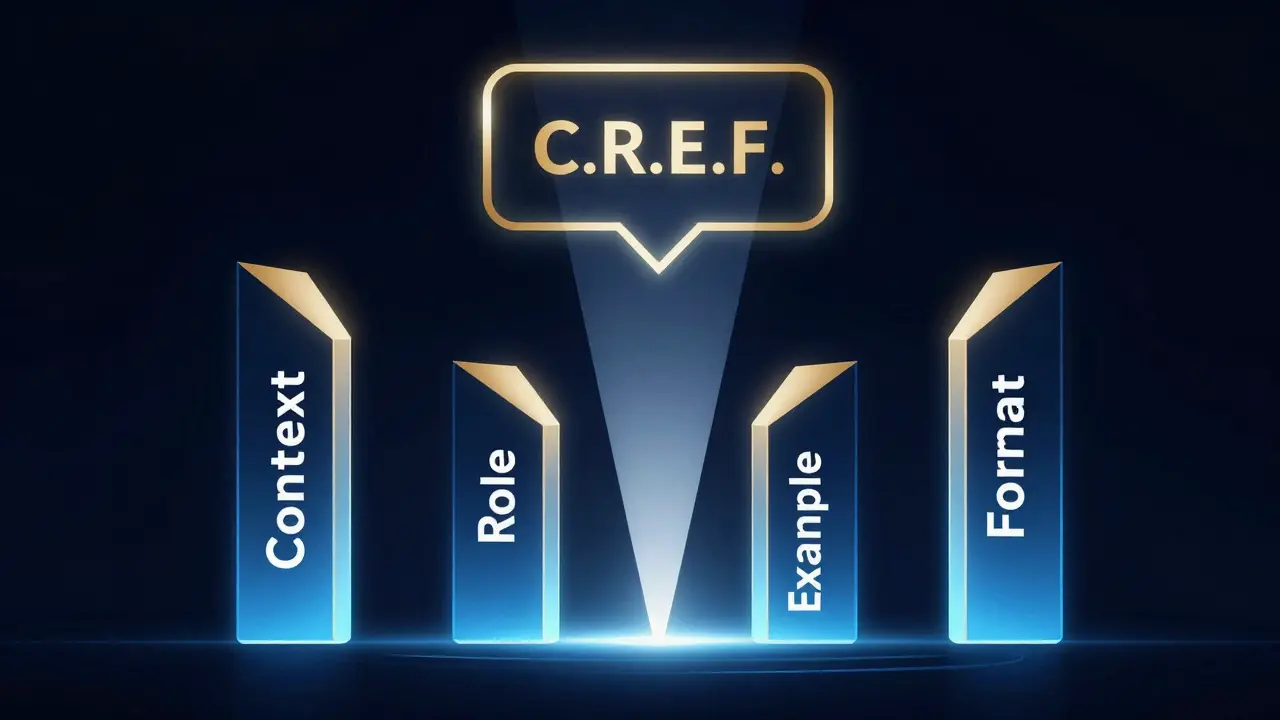
Use the **C.R.E.F.** framework for your prompts:
- Context: Who are we talking to? (e.g., "Busy moms aged 30-45")
- Role: Who is the AI? (e.g., "A witty lifestyle coach")
- Example: Show, don’t just tell. (e.g., "Here is a previous post that got high engagement...")
- Format: What does the output look like? (e.g., "Three bullet points, under 280 characters")
Instead of "Write a LinkedIn post about productivity," try this: "Act as a senior project manager. Write a LinkedIn post targeting startup founders. Explain why 'deep work' beats multitasking. Use a conversational tone, include a hook question at the start, and end with a call to action. Keep it under 150 words."
The difference in quality is night and day. The first gives you fluff. The second gives you a draft you can actually use.
Batch Creating Content Without Losing Your Soul
Consistency is king in Social Media Marketing. But consistency kills creativity if you do it manually. Here is how to batch produce content efficiently.
Start with a "Content Pillar" session. Tell ChatGPT your main topic for the month-say, "Sustainable Fashion." Ask it to generate twenty distinct angles or sub-topics. Then, pick the five best ones. For each angle, ask for three different formats: a short-form video script, a carousel outline, and a text-only post.
Once you have the drafts, apply the "Human Polish." This is crucial. Read through the AI-generated text and change any phrase that sounds too perfect. Add a slang term your audience uses. Insert a personal anecdote. Break a rule of grammar for emphasis. This step ensures the content feels authentic. People connect with humans, not algorithms. If they sense the post was 100% machine-generated, they scroll past.
| Task | Manual Approach | AI-Assisted Approach |
|---|---|---|
| Ideation | Staring at wall, random notes | Structured brainstorming lists in 2 mins |
| Drafting | 1 hour per post | 5 minutes per post (including edits) |
| Tone Consistency | Varies by mood/fatigue | Uniform across all posts |
| Error Rate | Low (if proofread) | Medium (requires fact-checking) |
Repurposing Old Content Like a Pro
You likely have old blog posts, newsletters, or webinar recordings gathering dust. This is gold mine material for ChatGPT. Don’t write new content when you can remix the old stuff.
Paste a long-form article into the chat window. Ask ChatGPT to extract the top five key takeaways and turn them into a thread for X. Then, ask it to convert those same points into an engaging LinkedIn newsletter summary. Finally, ask for a catchy Instagram Reel script based on the core argument.
This technique, known as content repurposing, maximizes the ROI of your initial effort. One piece of deep research becomes twelve pieces of social content. Just ensure you update any statistics or dates before reposting, especially since we are now in mid-2026. Outdated info kills credibility faster than bad grammar.

Analyzing Audience Sentiment Automatically
Most social media managers ignore their comments section after hitting "post." That’s a mistake. Your audience is telling you exactly what they want, but there’s too much noise to read manually.
Copy and paste a block of recent comments or DMs into ChatGPT. Ask it to: "Analyze these customer comments. Identify the top three pain points mentioned. Summarize the overall sentiment (positive/negative/neutral). Suggest two response strategies for the negative feedback."
This turns qualitative data into actionable insights. You might discover that 40% of your users are confused about your pricing page. That’s not a social media issue; that’s a website UX issue. Catching this early saves you money and frustration.
Avoiding the AI Trap: Common Pitfalls
Using AI isn’t risk-free. Here are the traps that sink brands:
- Hallucinations: ChatGPT can invent facts. Never let it write financial advice, medical claims, or historical dates without verifying them against primary sources.
- Generic Voice: If your brand has a unique personality, you must define it in the prompt. Otherwise, your posts will sound like everyone else’s.
- Over-Automation: Don’t set up a bot to auto-post without review. Context matters. A joke that works on Tuesday might flop on Friday due to current events.
Always keep a human in the loop. AI is the engine, but you are the driver.
Next Steps for Implementation
Don’t try to overhaul your entire strategy overnight. Start small. Pick one platform. Pick one type of content (e.g., Twitter threads). Spend one afternoon building a library of five master prompts tailored to your brand voice. Test them. Refine them. Once you see the time savings, expand to other channels.
If you’re struggling with tone, record yourself speaking naturally, transcribe it, and feed that transcript to ChatGPT with the instruction: "Analyze my speaking style and mimic this tone in future outputs." This creates a custom voice profile that keeps your brand authentic.
Can ChatGPT replace a social media manager?
No. ChatGPT can handle drafting, ideation, and basic analysis, but it lacks strategic intuition, cultural nuance, and crisis management skills. A human manager is still needed to oversee strategy, verify facts, and engage authentically with the community.
How do I make ChatGPT sound less robotic?
Specify a persona (e.g., "friendly expert"), request specific sentence structures (e.g., "use short sentences"), and provide examples of your past successful posts. Also, always edit the output to add personal anecdotes or industry-specific slang.
Is it ethical to use AI for social media content?
Yes, as long as you disclose it if required by platform policies and you verify all information. Transparency builds trust. Using AI as a tool to enhance human creativity is widely accepted in the marketing industry.
What is the best version of ChatGPT for marketing in 2026?
For most marketers, the latest GPT-4o or equivalent multimodal models offer the best balance of speed, reasoning, and image understanding. These models can analyze visual assets alongside text, making them ideal for creating cohesive social media campaigns.
How often should I update my prompts?
Review your prompts quarterly. As your brand voice evolves and new social media trends emerge, your instructions need to adapt. Keep a "prompt library" document where you save the best-performing instructions for future reference.